
Types of References
Reference quality directly determines asset quality. We use five tiers: media references (fastest), AI-assisted fill-in (ideation only), patents (technical), 3D scan data (proportions), and physical objects (gold standard).
The reference-gathering process can be divided into several categories based on reliability, availability, and production value.
Media References
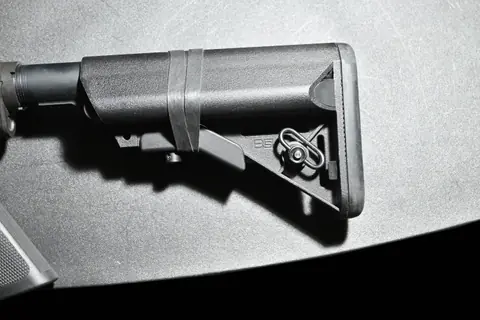
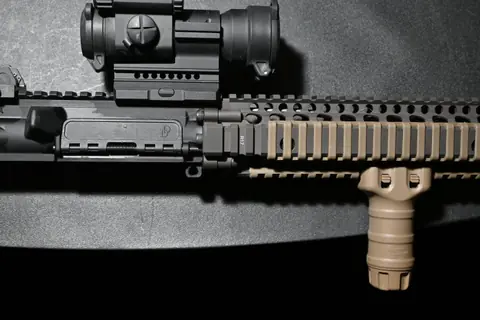
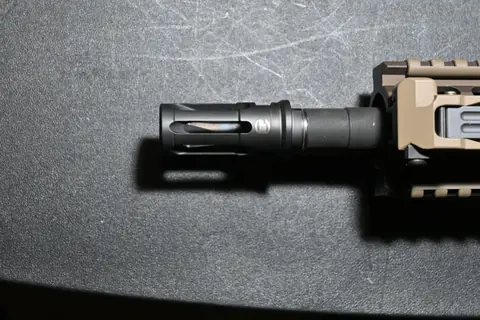
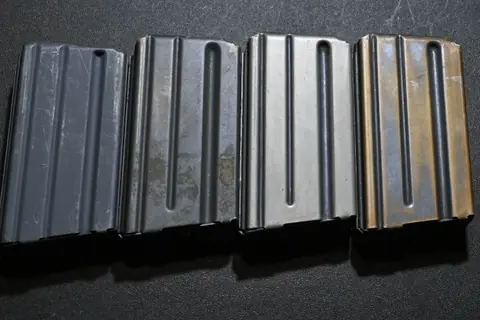
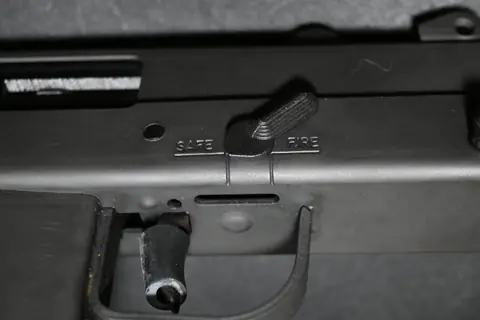
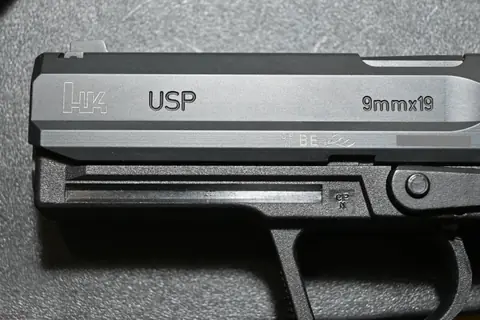
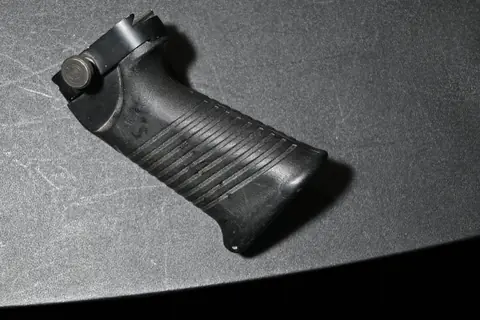
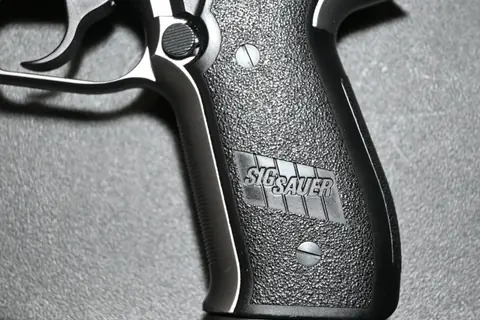
Photos, videos, films, forum posts, museum images - fast and broad but not always reliable. Lens distortion, compression, replicas, and airsoft versions can mislead the artist.
This includes photos, videos, games, films, documentaries, product shots, forum posts, museum images, collector materials, and any reference that can be found online or captured manually.
Media references are usually the first and fastest source of information. They are especially useful for understanding silhouette, proportions, material behavior, wear, color variation, markings, and how the object looks under different lighting conditions.
However, media references are not always reliable. Lens distortion, compression, incorrect perspective, aftermarket modifications, replicas, airsoft versions, or poor lighting can easily mislead the artist.
AI-Assisted Fill-In
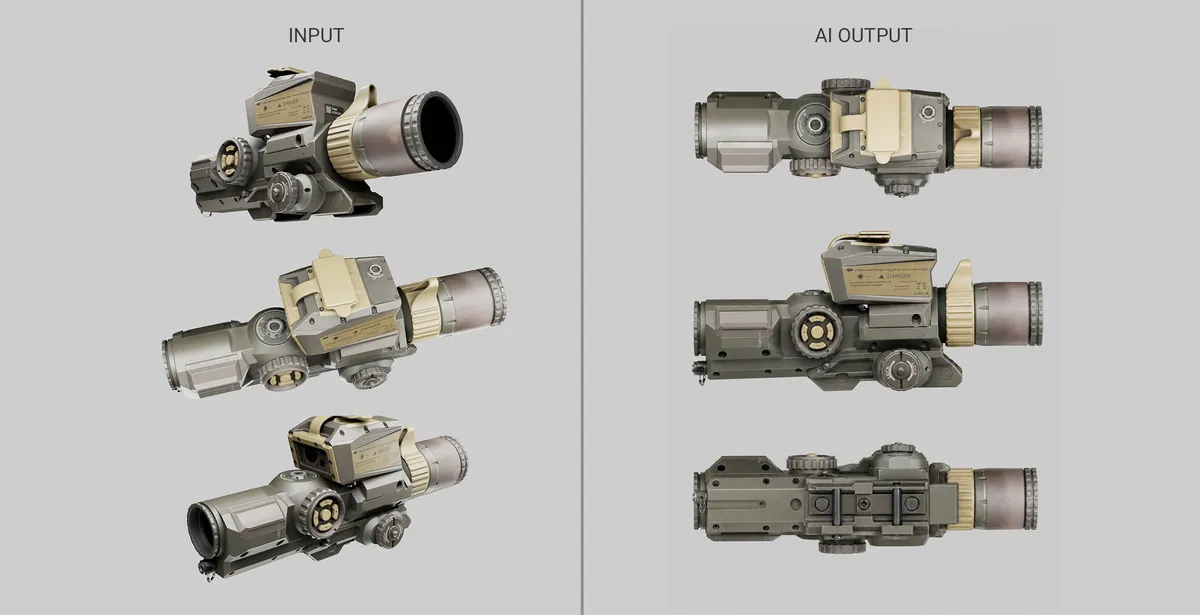
AI can suggest missing angles when reference is extremely limited - but treat it as ideation only, never as ground-truth data.
AI-generated reference can be useful in very specific cases, but it should be treated with caution.
It may help generate missing angles or suggest visual continuity when reference material is extremely limited. However, AI output is not ground-truth data. It can easily invent incorrect construction details, impossible mechanical connections, or inconsistent proportions.
For production, AI should be used only as a supporting ideation tool and never as the primary reference source for a realistic asset.
Patents
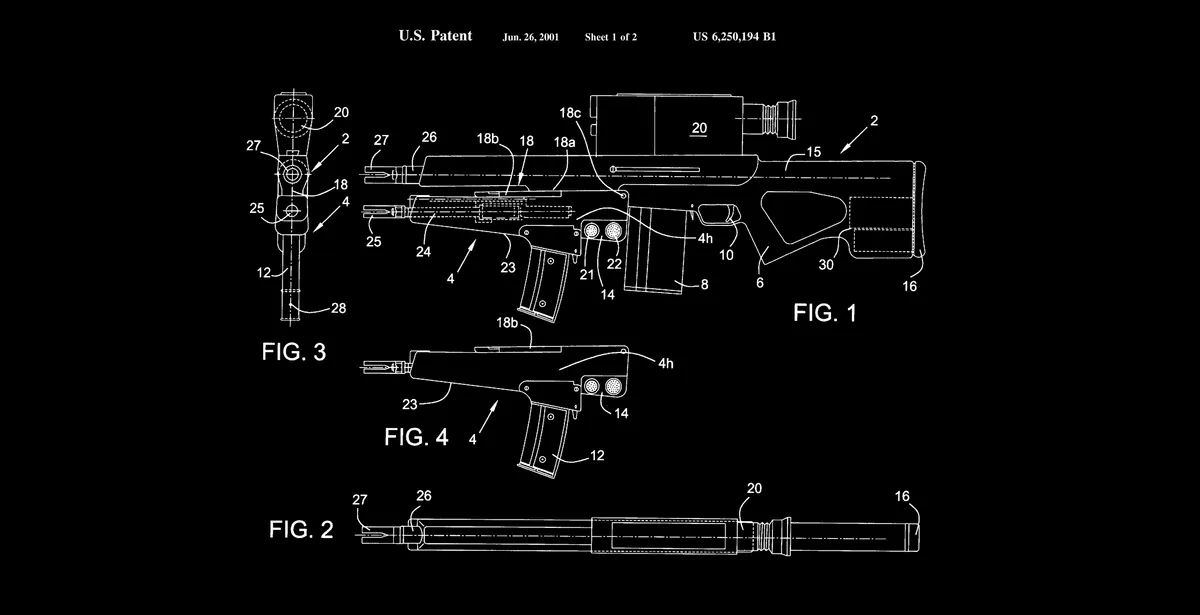
Valuable for technical drawings and exploded diagrams. Patent names differ from product names - search by patent numbers engraved on the physical object for best results.
Patents can be a valuable source of technical information, especially when they include drawings or exploded diagrams.
However, patent drawings are often simplified. They are created to describe an invention legally, not to provide production-ready engineering documentation. They may omit surface details, simplify proportions, or abstract complex mechanical parts.
Still, patents can be extremely useful for making “inspired” CAD models.
3D Scan Data
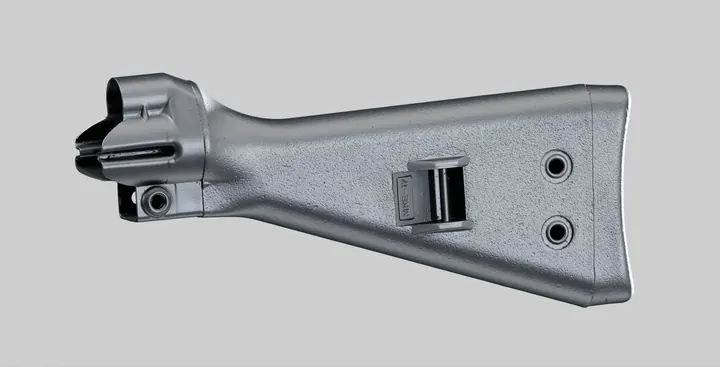
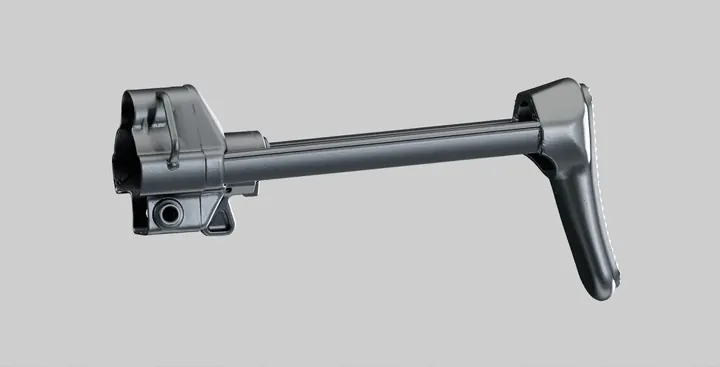
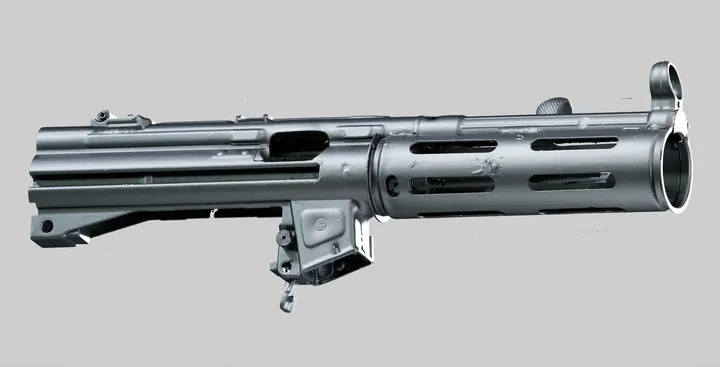
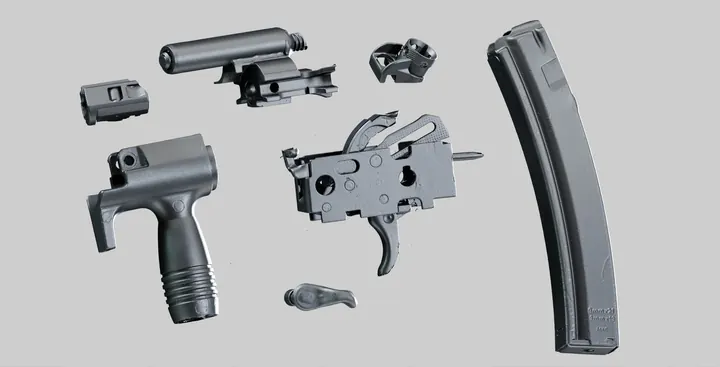
Captures real-world shape, scale, and surface - significantly reduces time to establish correct proportions. Strong base for high-poly reconstruction and baking.
3D scan data provides a high-value starting point because it captures real-world shape, scale, and surface information from a physical object.
Depending on the scanning method, it can provide accurate proportions, complex curvature, manufacturing imperfections, edge wear, surface deformation, and other details that are difficult to reconstruct manually from photos alone.
For weapon art, scan data can significantly reduce the time needed to establish correct proportions and can serve as a strong base for high poly reconstruction, retopology, baking, and material analysis.
Physical Object
The gold standard. Holding, measuring, and scanning the real thing gives confidence in weight, material contrast, assembly logic, and mechanical relationships - critical for VR where the player also perceives the asset physically.
The best reference is always the real object.
When the asset you are trying to recreate can be physically held, measured, photographed, scanned, and observed under controlled lighting, the production team gains a much higher level of confidence.
A physical object allows artists to understand not only shape and proportion, but also weight, material contrast, assembly logic, mechanical relationships, surface finish, and how the object behaves in the hand.
For VR, this is especially valuable because the player will also perceive the asset as a physical object in space.
Reference Search Basics
Start with search engine keyword variations. Use -airsoft to filter replicas. For patents, search by patent number (often engraved on the object) rather than product name.
Searching for media references and patents usually starts with the simplest method: using a search engine. There are no hidden tricks here - the main goal is to test different keywords, product names, manufacturers, model numbers, and related terms until useful material appears.
However, basic search operators can make the process much more efficient. For example, adding a minus sign before a word excludes pages that contain it. This is especially useful when filtering out irrelevant replicas or airsoft results:
weapon model name -airsoftPatent research follows a slightly different logic. Specialized services such as Google Patents can be very useful, but product marketing names do not always match patent terminology. A good starting point is the physical object itself. Many products have patent numbers engraved or printed directly on them, usually in a format similar to:
US 12,345,678Using the patent number can lead to much more accurate results than searching by the public product name alone.