
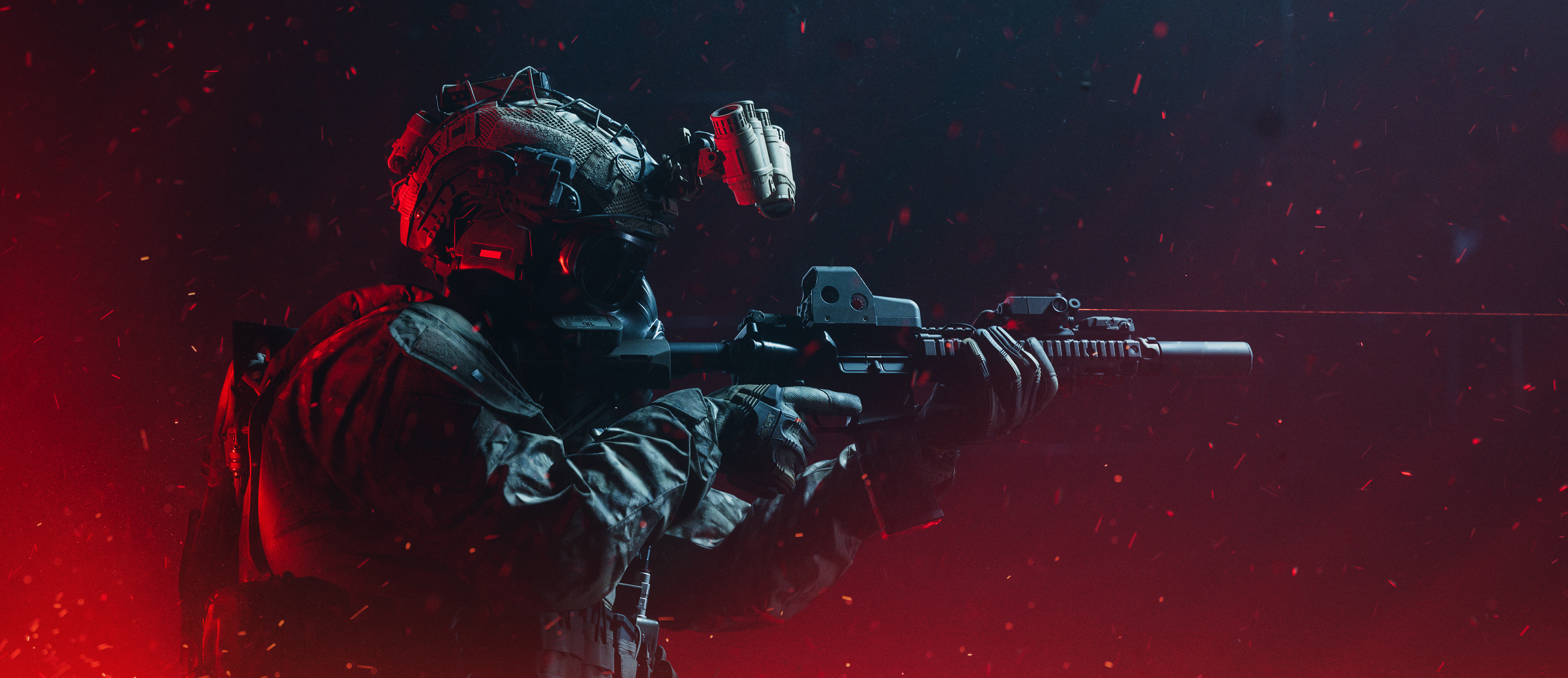
Keal Studio’s weapon art pipeline combines AAA production experience with the specific demands of VR. Because players can inspect assets at close range and from any angle, realistic weapons require greater accuracy, careful optimization, and a balance between visual quality, platform constraints, budget, and production time.
Keal Studio’s production pipeline was established by a team with experience working on a wide range of AAA game projects. Throughout that time, our artists and technical specialists have contributed to the creation of characters, weapons, vehicles, environments, and other key assets that define the visual quality of modern games.
VR projects introduce a unique set of challenges. Unlike traditional games, where assets are usually perceived through a single camera, VR allows the player to experience the world through a stereoscopic image - from two slightly different points of view: the left and right eye. This changes how players perceive scale, proportions, surface details, reflections, and material response.
As a result, the requirements for high-quality hero assets become significantly higher. This is especially true for weapon art in VR, where the player can hold an object close to their eyes, rotate it freely, inspect it from any angle, and immediately notice imperfections that might remain invisible in a traditional first-person shooter.
Creating realistic weapons for VR requires a careful balance between artistic quality, technical optimization, and production efficiency. It is not enough to simply apply a standard AAA pipeline. The process must combine proven industry techniques with new approaches adapted specifically for VR constraints, platform performance, budget limitations, and production timelines.
In this article, we will walk through the key principles behind the “Direct Action VR” weapon art pipeline and provide a sneak peek into how AAA-quality assets can be optimized and made achievable even under limited budgets or tight deadlines.
Asset Priority and Reference Strategy
Before production begins, every weapon asset is evaluated through three factors: importance, rarity, and production complexity. Iconic assets leave less room for error, but their cultural visibility usually makes reliable reference material easier to find.
Before production begins, every asset needs to be evaluated through three key factors: importance, rarity, and production complexity.
For weapon art, importance is not defined only by gameplay value. It is also shaped by how widely recognizable the weapon is outside the game’s core audience. Some firearms have moved far beyond their technical function and have become cultural symbols. The AK platform and the M16 family are strong examples of this. They are not just recognizable rifles; they are visual archetypes that appear in films, news, games, political imagery, and popular culture.
A good example of this cultural weight is the famous line from Yuri Orlov in Lord of War:
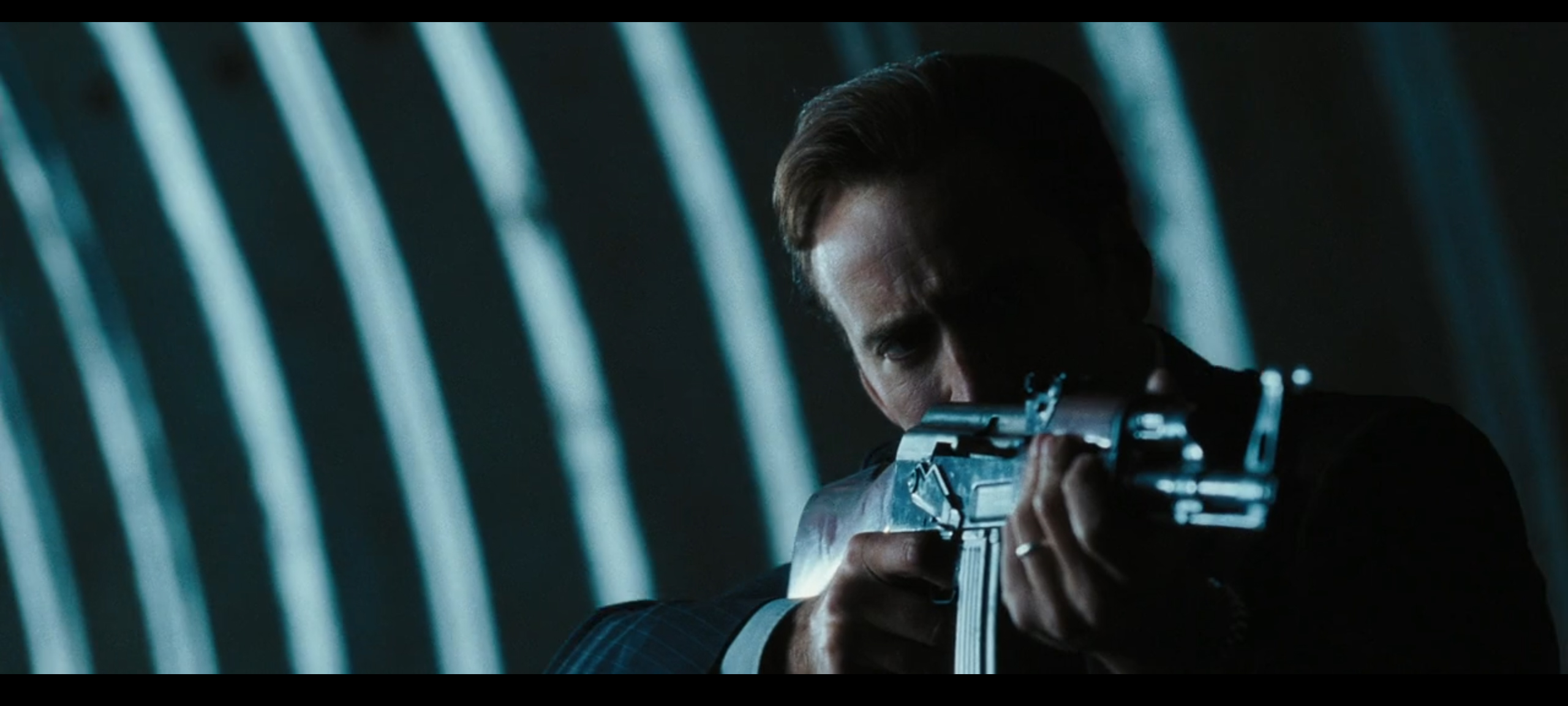
Film still from Lord of War (2005). © Lions Gate Films. All rights belong to their respective owners. Used for editorial reference.
“Of all the weapons in the vast Soviet arsenal, nothing was more profitable than Avtomat Kalashnikova model of 1947, more commonly known as the AK-47, or Kalashnikov. It’s the world’s most popular assault rifle. A weapon all fighters love. … It’s so easy, even a child can use it; and they do. The Soviets put the gun on a coin. Mozambique put it on their flag…”
This creates a clear production precedent: the more iconic the asset is, the less room there is for error.
Cultural icons are highly recognizable, which means players will notice incorrect proportions, weak silhouettes, wrong materials, or poorly interpreted details very quickly. At the same time, these assets are usually easier to research because there is a large amount of reference material available online: photos, videos, manuals, museum archives, collector posts, game breakdowns, film appearances, and enthusiast discussions.
Category 1: Archetypes / Cultural Icons
Weapons recognized even by non-enthusiasts demand the highest visual discipline. In VR, accurate silhouette, scale, proportions, materials, and construction must hold up under close inspection from every angle.
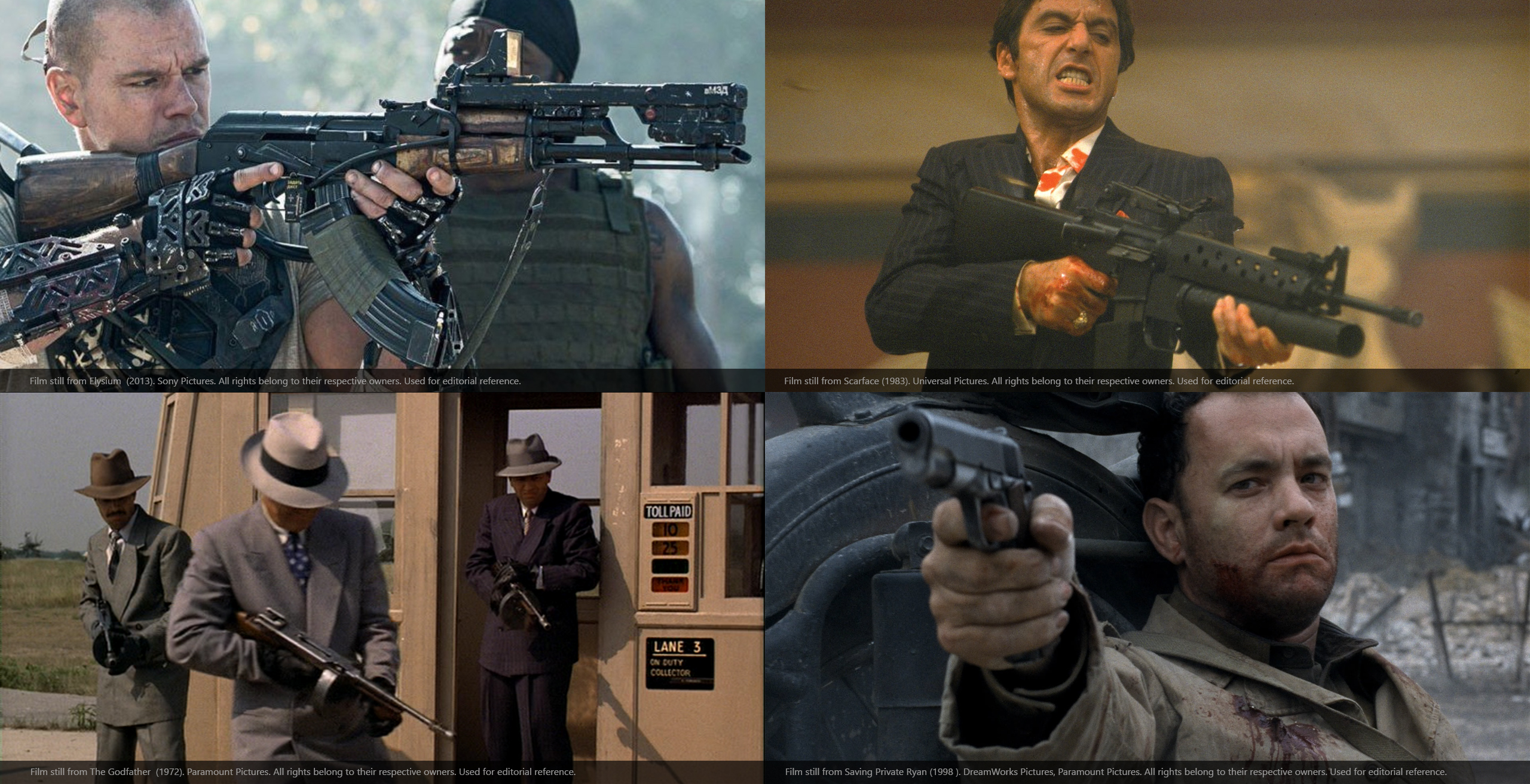
Cultural icons include weapons that are recognizable even to people who are not part of the firearm or military enthusiast community.
Examples may include:
- AK-type rifles
- M16 / AR-15 family silhouettes
- RPG-type launchers
- Iconic sidearms frequently used in cinema and games
These assets require the highest level of visual discipline. Their silhouettes, scale, proportions, material response, wear patterns, and major construction details must feel correct from the first glance.
For VR, this becomes even more important. The player is not just seeing the weapon in a cinematic frame or as a first-person viewmodel. They can physically bring it closer, rotate it, inspect it from the side, and compare its form through stereoscopic depth. Any mismatch in scale or shape becomes much easier to notice.
Category 2: Classics of Entertainment and Game Culture
The familiar weapons of action cinema and tactical games must satisfy both broad audiences and knowledgeable enthusiasts. They require careful detail work, but usually have abundant reference material.
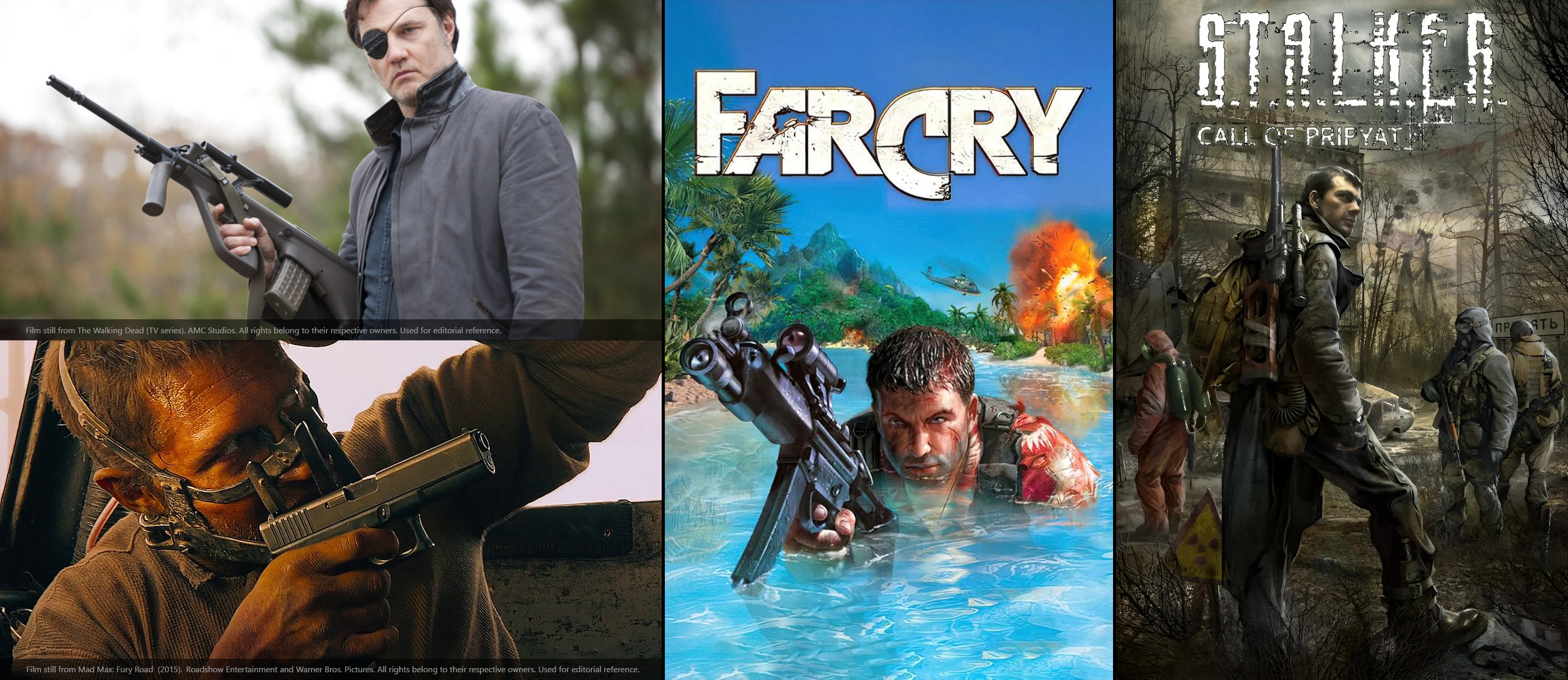
The next category can be described as “classics” - weapons that form the foundation of action cinema, tactical shooters, and mainstream game culture.
If someone has played Counter-Strike or watched classic action films like Die Hard, they will likely recognize many of these weapons even without knowing their exact names. These are the workhorses of the entertainment industry. They shape the visual language of weapon culture for a mass audience.
For the general public, these assets may simply feel familiar. For the weapon enthusiast community, however, many of them are also cultural icons. That means they still require a high level of attention to detail.
From a reference-gathering perspective, this category is relatively friendly. There is usually a large amount of material available across forums, films, YouTube channels, game references, product photography, and enthusiast media.
Category 3: Tactical / Enthusiast-Level Assets
Specialized tactical assets add credibility for weapon-savvy players, but their configurations and small technical differences make reference gathering more difficult.
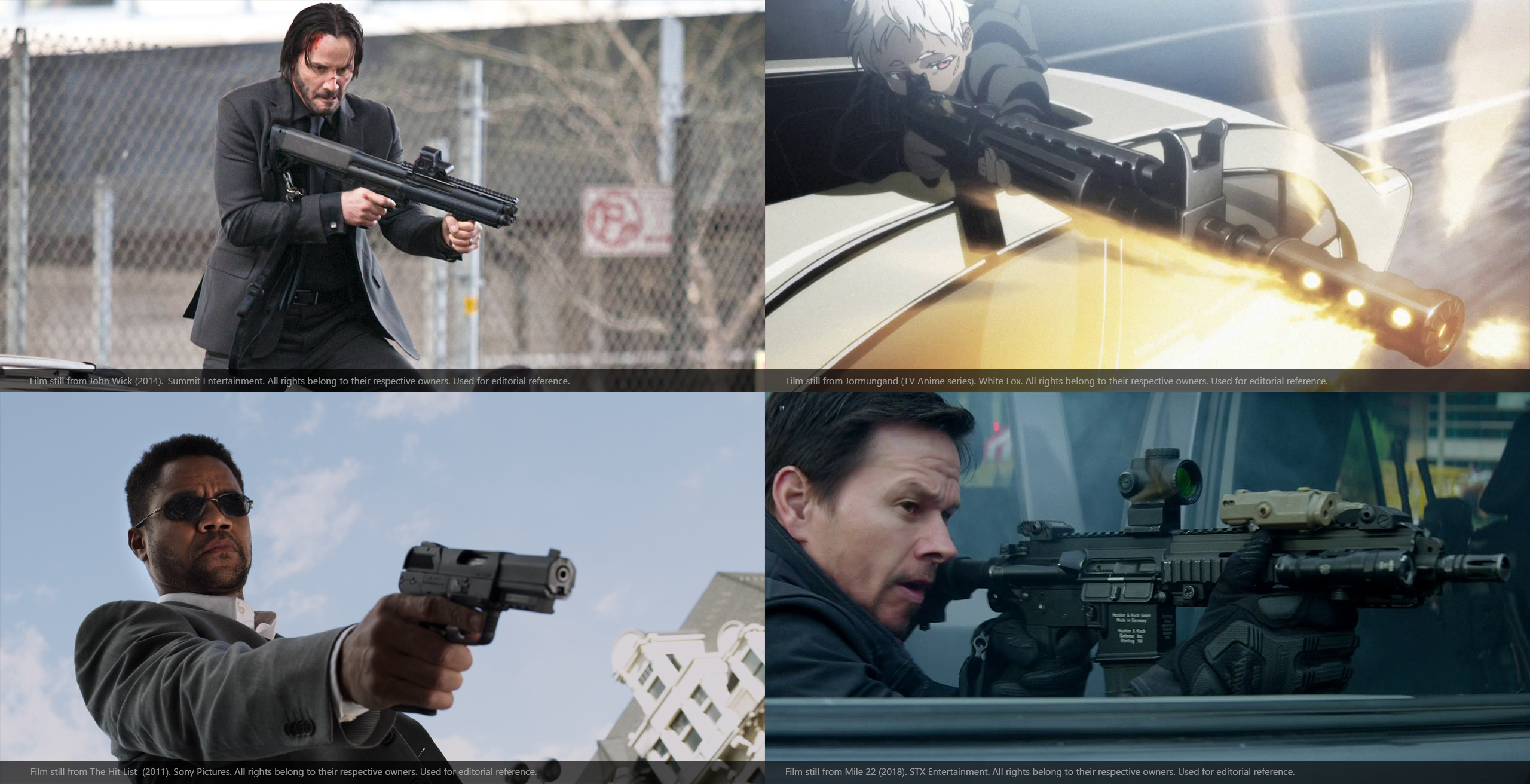
Below the mainstream classics, we move into a more specific tactical category.
This is where the line between a casual viewer and an enthusiast becomes clear. For example, distinguishing an HK416 from a standard M4 requires a certain level of knowledge. These are assets for players who read specialized forums, study weapon configurations, notice reload animations, and pay attention to small details in accessories, rails, sights, stocks, receivers, and surface finishes.
Including this type of asset in a game or film can add depth and credibility to the world. It can become a detail that tells the audience: “The team behind this project knows what they are doing.”
For projects aimed at a weapon-savvy audience, enthusiast-level assets are essential. However, the reference search becomes more complicated. There may be fewer clear photos, fewer reliable angles, and more variation between configurations, manufacturers, modifications, and production batches.
Category 4: Expert / Specialized Assets
Rare prototypes and specialized systems offer limited references but more room for reconstruction. Creative freedom is acceptable only when supported by believable engineering and consistent design logic.
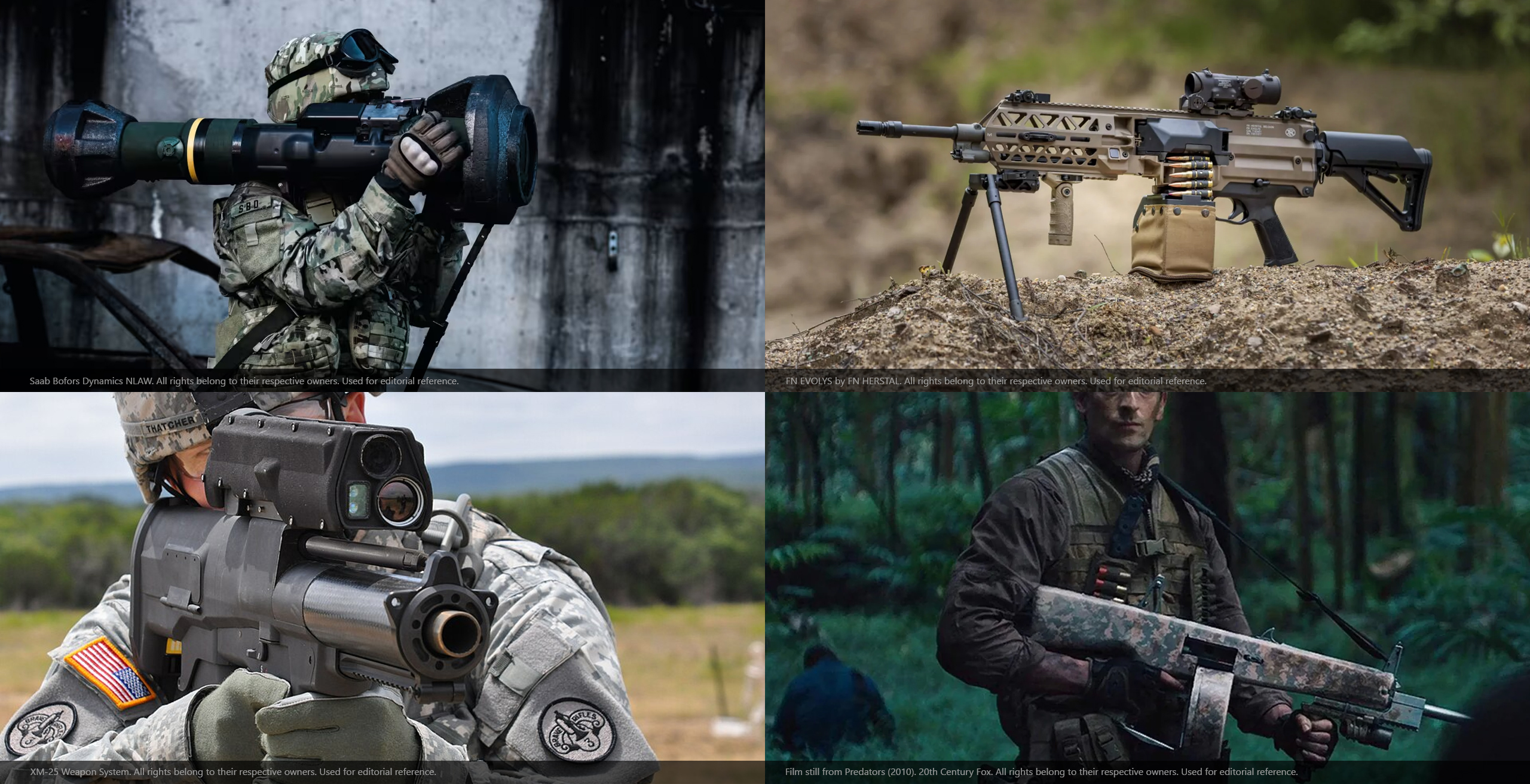
The rarest category is expert or specialized weaponry.
These assets may include military-specific systems, experimental designs, rare prototypes, expensive engineering solutions, or highly specialized equipment that is rarely seen on the civilian market. In many cases, the best references may only appear in blockbuster productions with military consultants, private armory access, defense exhibitions, or real service experience.
For this category, finding reliable information can become a serious challenge. There may be limited photography, inconsistent naming, low-resolution documentation, restricted access, or only partial visual coverage.
However, this limitation can also work in the artist’s favor.
Low recognizability gives the team more room for creative reconstruction. If certain parts of the asset cannot be confirmed through reference, they can be interpreted through design logic, engineering plausibility, and consistency with the rest of the object. In other words: if we cannot find the exact answer, we can design the missing part in a way that feels believable.
This leads to an important production principle:
The rarer and less recognizable the asset is, the more creative freedom the team has - but that freedom must still be supported by functional logic and visual credibility.